

“Health is the greatest gift, contentment the greatest wealth, faithfulness the best relationship.” – Buddha





PNA Spotlight: Dr. Aaron Cohen-Gadol
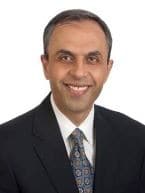 This month the PNA Spotlight focuses on Dr. Aaron Cohen-Gadol, a professor at Indiana University Department of Neurosurgery. He is the director of neurosurgical oncology and its fellowship, and co-director of the Signature Center for Brain and Neurological Tumors. Dr. Cohen-Gadol earned his undergraduate degree from the University
of California at San Diego and attended medical school at the University of Southern California. He then completed his residency training at Mayo Clinic in Rochester, Minnesota. He also completed fellowship training in two subspecialties: epilepsy surgery (Yale University) and skull base/cerebrovascular surgery (University of Arkansas.) In addition, Dr. Cohen holds a Master’s Degree in Clinical Research from Mayo Graduate School and an MBA from Kelley School of Business. His areas of interest include surgical treatment of complex intracranial tumors and vascular lesions.
He is the founder and president of The Neurosurgical Atlas (https://www.neurosurgicalatlas.com), a multimedia resource for neurosurgical techniques. Dr. Cohen-Gadol was kind enough to answer some questions posed by the PNA. His answers follow.
Count on your Xeris CareConnection™ Team for unparalleled Cushing’s Support
Cushing’s can be challenging, but there is support so patients can feel like themselves again. The main goal of treating Cushing’s is to get cortisol levels back to normal. This Pituitary Awareness Month, Xeris Pharmaceuticals® is highlighting the importance of one-on-one support for patients living with Cushing’s Syndrome and support for HCPs treating Cushing’s Syndrome.
Sign up to get dedicated support:
Patients: Sign up for support | Recorlev® (levoketoconazole)
HCP’s: Connect with Xeris support | RECORLEV® (levoketoconazole)
Have more questions? Call for more support at 1-844-444-RCLV (7258)
PNA Medical Corner: Somatotroph Adenoma in a Young Adult
 This month the PNA Medical Corner spotlights an article co-authored by a member of the PNA, Dr. Ursula Kaiser, Chief of the Division of Endocrinology, Diabetes and Hypertension at Brigham and Women’s Hospital and Professor of Medicine at Harvard Medical School. The case report looks at early onset excess of growth hormone in the context of a somatotroph adenoma in a young adult.
Link: https://doi.org/10.1210/jcemcr/luad030
Early Onset GH Excess: Somatotroph Adenoma in a Young Adult
Featured News and Updates

The FDA has approved NGENLA (somatrogon-ghla)
The FDA has approved NGENLA (somatrogon-ghla), a once-weekly, human growth hormone analog indicated for treatment of pediatric patients aged three years and older who have growth failure due to an inadequate secretion of endogenous growth hormone.
News Articles October 2026
Pituitary story: teen battles craniopharyngioma
A story in the Yakima Herald spotlights the case of a high school student from Washington State who underwent surgery for a craniopharyngioma near his pituitary gland. Read more:
Germ cell tumors masquerading as pituitary inflammation
A new study from China looks at germ cell tumors in adults and concludes that they can often be mistaken for pituitary inflammation. Read more: https://bioengineer.org/rare-brain-germ-cell-tumors-in-adults-often-masquerade-as-pituitary-inflammation-study-finds/
Pituitary story: 82-year-old undergoes pituitary neurosurgery
A hospital in Srinagar, India, reports on a high-risk surgery on an 82-year-old female patient to remove a pituitary macroadenoma. Read more: https://kashmirconvener.com/82-year-old-woman-undergoes-high-risk-pituitary-tumour-surgery-at-paras-srinagar/
Child in Ukraine receives donation of pituitary medicine
The nonprofit Direct Relief reports on the case of a 12-year-old boy in Ukraine with pituitary dwarfism who has received growth hormone medications, thanks to charitable donations. The Russian invasion of Ukraine has severely disrupted medical supplies in that country. Read more: https://www.directrelief.org/2026/09/ukraine-war-children-growth-hormone-donations/
Case study: Craniopharyngioma linked to spontaneous singing
A story in Medical Daily.com looks at the case of a woman in Poland with a craniopharyngioma whose symptoms included a spontaneous desire to sing religious songs. The symptom subsided after surgical intervention, but then returned.
https://www.medicaldaily.com/brain-lesions-spirituality-circuit-religious-singing-tumor-479227
Research Articles
Research Articles October 2026
Pituitary Tumors
Emerging insights into the pathophysiology of pituitary tumour microenvironment.
Fuentes-Fayos AC, Gil-Duque I, De la Rosa-Herencia AS, Sarmento-Cabral A, Flores-Martínez Á, Cano DA, Martínez-Fuentes AJ, Luque RM.Endocr Relat Cancer. 2026 Aug 26:ERC-26-0262. doi: 10.1530/ERC-26-0262. Online ahead of print.
Imaging
Ahmed F.J Imaging Inform Med. 2026 Aug 28. doi: 10.1007/s10278-026-02221-6. Online ahead of print.PMID: 42665755
Magnetic resonance elastography of brain tumors.
Koyuncu N, Uca YO, Sack I.Z Med Phys. 2026 Aug 28:S0939-3889(26)00093-0. doi: 10.1016/j.zemedi.2026.08.001. Online ahead of print.
Pituitary Surgery
Tian L, Liu M, Luo M, Zhou C, Gu J, Zeng J, Shen Q, Tong Z, Jiang Y, Luo B, Lin J, Sheng Z, Peng Y.Neurosurg Rev. 2026 Aug 28;49(1):542. doi: 10.1007/s10143-026-04467-8.
ERAS Protocol Elements and Neurosurgery-Specific Considerations: A Narrative Review.
Domi R, Saxena S, Berger-Estilita J, Biasucci DG, Meco BC, Lilaj K, Huti G, Matot I, Rubulotta F, Camilleri Podesta AM.Turk J Anaesthesiol Reanim. 2026 Aug 28;54(4):248-261. doi: 10.4274/TJAR.2026.2606.
Xu Y, Uchida T, Burgos-Sosa E, Alvarez AS, Rinaldi M, Nakase T, Banu MA, Agostini L, Xiao L, Vigo V, Nisson PL, Menaker SA, Cohen-Gadol AA, Fernandez-Miranda JC.J Neurosurg. 2026 Aug 28:1-13. doi: 10.3171/2026.4.JNS252898. Online ahead of print.
Editor’s note: Dr. Fernandez-Miranda is a member of the PNA.
SurgAnt-ViVQA: learning to anticipate surgical events through GRU-driven temporal cross-attention.
Dhake SC, Huang J, He R, Khan DZ, Mazomenos EB, Bano S, Marcus HJ, Stoyanov D, Clarkson MJ, Hoque MI.Int J Comput Assist Radiol Surg. 2026 Aug 26. doi: 10.1007/s11548-026-03784-z. Online ahead of print.
Javidialsaadi M, Obillo A, Germanwala A, Ghannad AS, Jani RH, Ng I, Prabhu VC, Patel CR, Germanwala AV.Case Rep Neurol Med. 2026 Aug 25;2026:1964813. doi: 10.1155/crnm/1964813. eCollection 2026.
Extent of resection and craniopharyngioma recurrence: a volumetric analysis.
Sarkar S, Vijayaraghavan S, Thakar S, Aryan S.J Neurooncol. 2026 Aug 29;179(2):65. doi: 10.1007/s11060-026-05770-6.
Liang W, Xia X, Fan K, Yang T, Cheng J, Zhu X, Li Y, Wang J, Ma Y, Yang Y.Front Endocrinol (Lausanne). 2026 Aug 13;17:1796777. doi: 10.3389/fendo.2026.1796777. eCollection 2026.
Acromegaly
Rockwell S, Boley JS, Pulido N, Safa M, Chertman LS.Cureus. 2026 Jul 28;18(7):e113532. doi: 10.7759/cureus.113532. eCollection 2026 Jul.
Acromegaly and colorectal cancer risk: emerging roles of the gut microbiota.
Grifoni GFA, Favero V, Cozzi RC, Chiodini I.Front Endocrinol (Lausanne). 2026 Aug 13;17:1820034. doi: 10.3389/fendo.2026.1820034. eCollection 2026.
Sakaue TA, Mukai K, Kajimoto Y, Obata Y, Takahara M, Shimomura I.JCEM Case Rep. 2026 Aug 28;4(9):luag163. doi: 10.1210/jcemcr/luag163. eCollection 2026 Sep.PMID: 42666735
Hormonal Health
Cretu AM, Kamar AAM, Ciobica A, Puia D, Doroftei M, Doroftei B.Front Reprod Health. 2026 Aug 14;8:1914709. doi: 10.3389/frph.2026.1914709. eCollection 2026.
Copyright © 2024 Pituitary Network Association All rights reserved.
Disclaimer: PNA does not engage in the practice of medicine. It is not a medical authority, nor does it claim to have medical expertise. In all cases, PNA recommends that you consult your own physician regarding any course of treatment or medication.
Our mailing address is:
Pituitary Network Association
P.O. Box 1958
Thousand Oaks, CA 91358
(805) 499-9973 Phone - (805) 480-0633 Fax
Email [email protected]
You are receiving this Newsletter because you have shown interest in receiving information about our activities.
If you do not want to receive any more emails from PNA, Unsubscribe.