
“Half the costs of illness are wasted on conditions that could be prevented.” – Dr. Joseph Pizzorno
PNA Spotlight: Dr. Chandan Krishna
This month, the PNA Spotlight focuses on Dr. Chandan Krishna, an endovascular and skull base neurosurgeon at Mayo Clinic Arizona. He earned a Bachelor of Science in Computer Science from the University of Houston. He completed medical school at the University of Texas Medical Branch in Galveston, Texas, and a residency in neurosurgery at Methodist Neurological Institute in Houston. He also completed a neuro-endovascular fellowship at the State University of New York in Buffalo. Dr. Krishna answered a set of questions from the PNA. His answers follow.
Please tell us why you chose the field of neurosurgery.
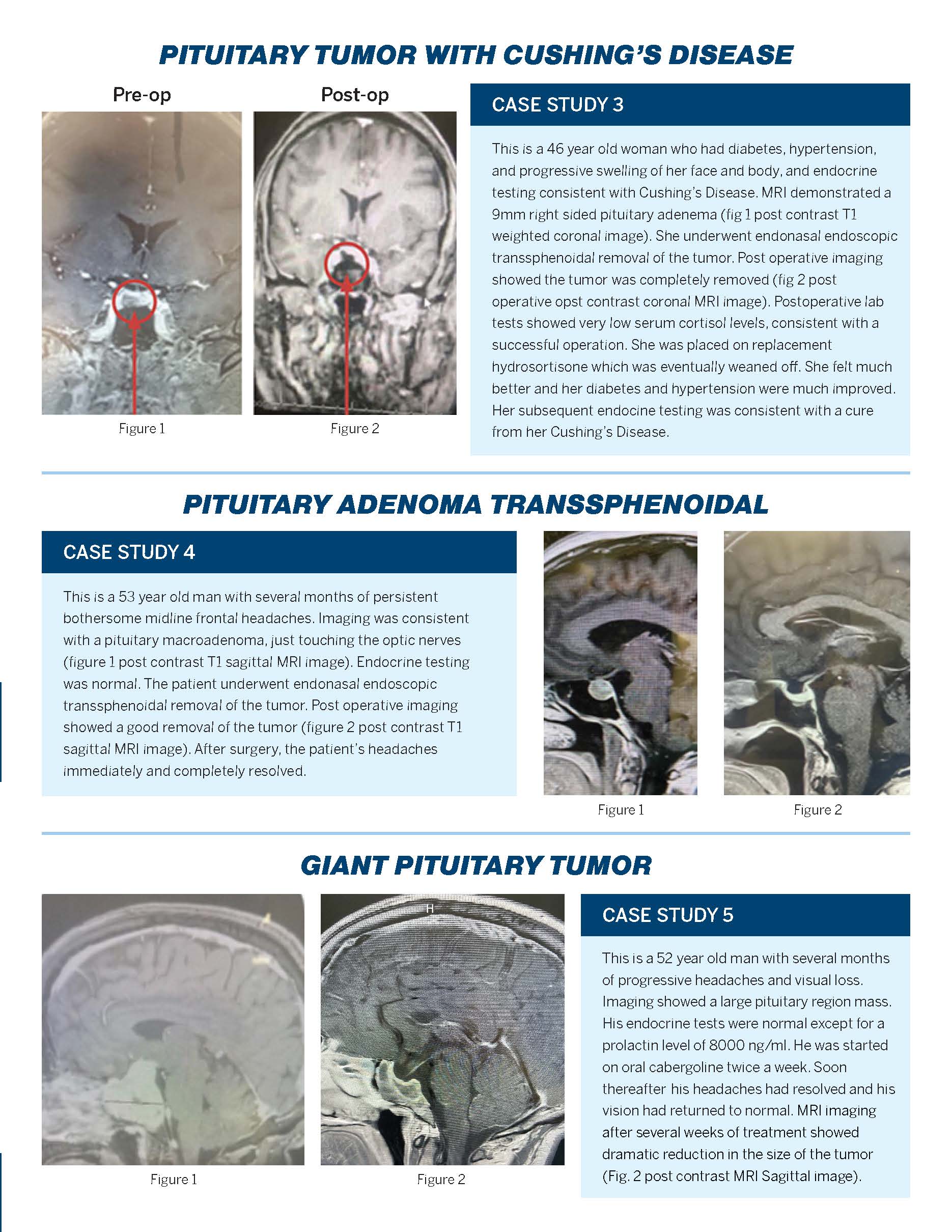
The pituitary gland fascinates me because, despite its small size, it has an enormous impact on the body’s function. Pituitary tumors also require a unique surgical approach. Through transsphenoidal surgery, we can often access these tumors through the nose without making a visible incision. Working closely with our ENT colleagues, we can treat patients in a way that minimizes disruption while making a meaningful impact on their quality of life.
Being able to restore vision, improve hormone function, and help patients return to normal activities is incredibly rewarding.
Tell us about your medical education.
My education is somewhat non-traditional for medicine. I completed my undergraduate degree in computer science in Texas, and then I decided to pursue what I like to call the real computer of the human body: the brain. I attended medical school at UTMB in Galveston, Texas, then pursued neurosurgery through residency training at Methodist Hospital in Houston’s Texas Medical Center. Afterward, I completed a two-year fellowship in endovascular surgery in Buffalo, New York.
I then joined Mayo Clinic Arizona, where I’ve been for the past 11 years.
Over that time, our pituitary program has continued to grow, supported by a highly collaborative, multidisciplinary approach to care. At Mayo Clinic Arizona, patients with pituitary conditions may be evaluated by endocrinology, neurosurgery, neuro-oncology, ENT, and neuro-ophthalmology, depending on their individual needs.
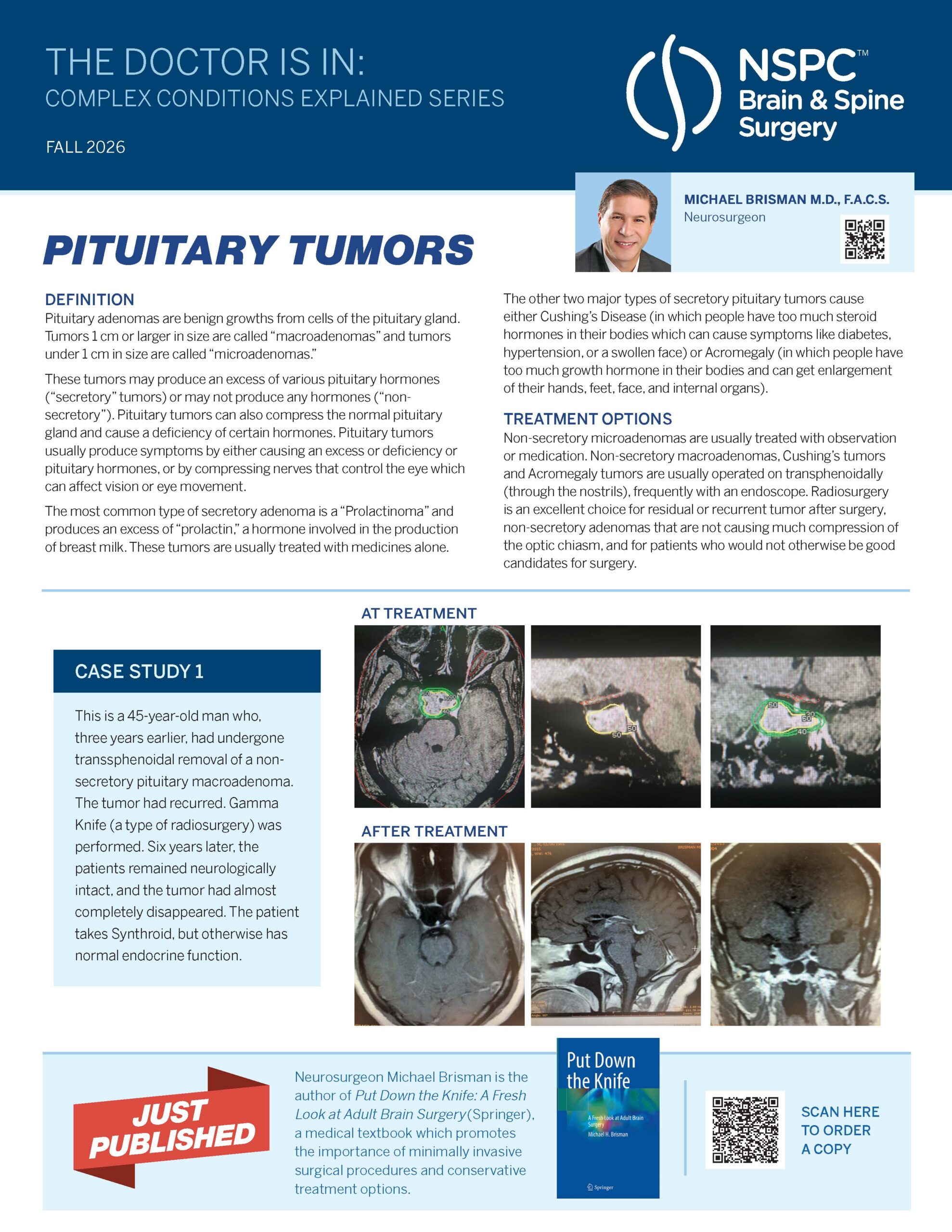
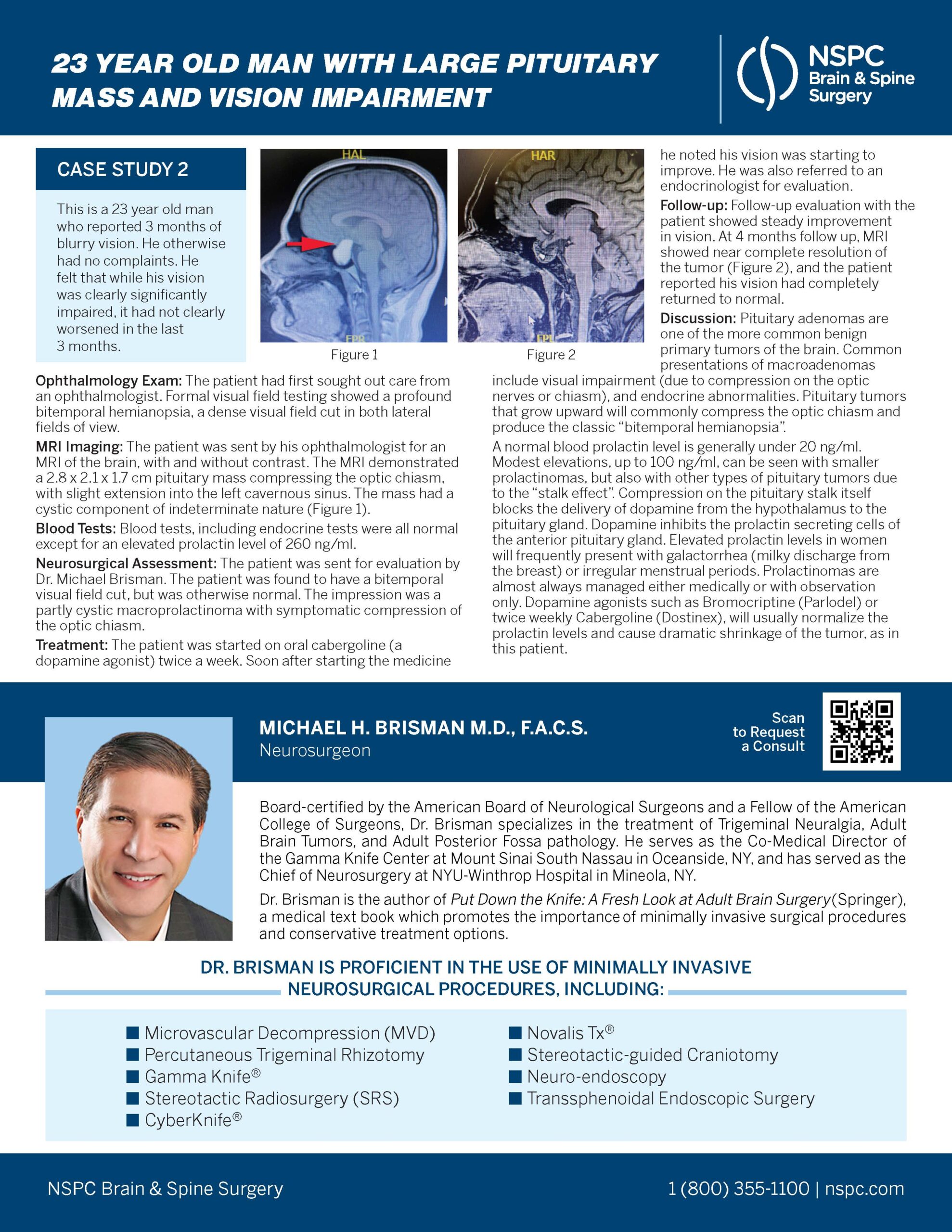
We review cases together and develop an individualized treatment plan, which may include observation, medical therapy, surgery, and/or long-term surveillance. Because pituitary tumors can affect vision, patients may also be evaluated by neuro-ophthalmologist Dr. Marie De Nome. In many cases, an enlarged pituitary adenoma can place pressure on the optic chiasm and affect peripheral vision.
After a comprehensive evaluation, some patients require routine follow-up imaging and monitoring, while others may benefit from surgery if the tumor is growing or causing symptoms.
Who have been your mentors?
There have been many mentors throughout different stages of my life, both inside and outside of medicine. My colleagues here at Mayo Clinic Arizona have been mentors, as have many of my colleagues in Rochester. We collaborate closely, learn from one another, and continually challenge each other to provide the best possible care. That exchange of knowledge and experience helps all of us become better physicians.
Read More Here
PNA Medical Corner: Consensus on genetic testing
This month the PNA Medical Corner highlights an article coauthored by multiple PNA-affiliated physicians, including Adriana Ioachimesci, Maria Fleseriu, and Shlomo Melmed. A statement from the Pituitary Society supports the use of genetic and somatic testing in the diagnosis of pituitary tumors.
Genetic testing in pituitary adenomas: a Pituitary Society International Consensus Statement.
Sunita M C De Sousa 1, Cynthia L Andoniadou 2, Adrian F Daly 3, Mônica Gadelha 4, Federico Gatto 5, Peter Kamenický 6, Pedro Marques 7, Martin Reincke 8, Frederique Ruf-Zamojski 9, Roberto Salvatori 10, Yutaka Takahashi 11, Christina Tatsi 12, Takako Araki 13, Sabrina Chiloiro 14, Laura Dichtel 15, Adriana G Ioachimescu 16, Susana Mallea-Gil 17, Dan A Niculescu 18, Alberto M Pereira 19, Ilan Shimon 20, John Wass 21, Gabriel Zada 22, Maria Fleseriu 23, Shlomo Melmed 9
Affiliations Expand
PMID: 42642458 DOI: 10.1038/s41574-026-01291-4

Abstract
Genetic testing of patients with pituitary adenomas enables delivery of genotype-based precision care. Germline testing mightidentify variants predisposing to formation of pituitary adenomas and, potentially, other neoplasms. These include loss-of-function variants in AIP, MEN1, CDKN1B, PRKAR1A, SDHA, SDHB, SDHC, SDHD and MAX; GPR101-containing Xq26.3 microduplications; and postzygotic gain-of-function GNAS variants. Somatic testing might help identify and manage aggressive pituitary adenoma types and very rarely-encountered pituitary carcinomas.
This Pituitary Society Consensus Statement provides evidence-based guidance on the clinical application of these genetic tests, focusing on germline genetic testing, with recommendations regarding genes for inclusion in panel testing, test indications, pre-test counselling, test methodologies, and the interpretation and follow-up of results. As somatic genetic testing is gradually becoming available in clinical practice, recommendations are provided regarding clinical scenarios in which somatic testing might be considered and which genes to test.
The consensus group concluded that genetic testing is an increasingly valuable adjunct in the assessment and management of people with pituitary adenomas. When indicated, genetic testing should ideally be undertaken within
a multidisciplinary team comprising endocrine, genetic and laboratory expertise to ensure high-quality testing and safe and effective result interpretation and follow-up.
Featured News and Updates
News Articles November 2026
A-I assisted pituitary surgery
A story in The Guardian explains what they say is the first artificial intelligence-assisted brain surgery to remove a tumor, done in London this past May. Doctors removed a pituitary tumor, partially guided by an AI system that analyzed the live camera images in real time. Read more: https://www.theguardian.com/technology/2026/aug/27/london-neurosurgeons-ai-assisted-operation-brain-tumour
Pituitary story: few symptoms aside from psychosis
An article in Medical Daily.com looks at an Egyptian case study about a female pituitary patient with an unusual presentation: blood tests showed normal levels for most endocrine testing aside from morning cortisol. She had euphoria and paranoia but no hallucinations, headache, nausea or visual complaints. She was diagnosed with suspected pituitary apoplexy. Read more: https://www.medicaldaily.com/psychosis-suspected-pituitary-apoplexy-cortisol-case-report-477700
Cushing’s drug gets orphan designation
An article in Pharmabiz.com announces that the European Commission has granted orphan status for Asedebart, an investigational anti-ACTH monoclonal antibody from the company Lundbeck, for the treatment of endogenous Cushing’s syndrome. Read more: https://www.pharmabiz.com/NewsDetails.aspx?aid=188155&sid=2
Possible pituitary patient found in medieval bone pit
An article in Medievalists.net focuses on the discovery of a skeleton in a mass grave near Cambridge in England that belonged to someone 6’5” tall, which is exceptionally large for a man of that time. The skull has a large round hole and signs of healing, leading experts to believe the man underwent some kind of surgery to relieve pressure on his brain, survived, but later died at a young age. Read more: https://www.medievalists.net/2026/08/trepanned-skull-found-in-early-medieval-mass-grave-in-england/
Pituitary Story: Opera singer recovers after 2 pituitary surgeries
 An article in OK Magazine via Press Reader examines the pituitary journey of Russell Watson, an opera singer in the U.K. Mr. Watson underwent surgery to remove a benign pituitary tumor, and then another when it grew back. He has now made a remarkable recovery. Read more: https://www.pressreader.com/foryou?popupArticleId=282011859208757
Research Articles
Research Articles November 2026
Pituitary Tumors
Emerging insights into the pathophysiology of pituitary tumour microenvironment.
Fuentes-Fayos AC, Gil-Duque I, De la Rosa-Herencia AS, Sarmento-Cabral A, Flores-Martínez Á, Cano DA, Martínez-Fuentes AJ, Luque RM.Endocr Relat Cancer. 2026 Aug 26:ERC-26-0262. doi: 10.1530/ERC-26-0262. Online ahead of print.
Imaging
Ahmed F.J Imaging Inform Med. 2026 Aug 28. doi: 10.1007/s10278-026-02221-6. Online ahead of print.PMID: 42665755
Magnetic resonance elastography of brain tumors.
Koyuncu N, Uca YO, Sack I.Z Med Phys. 2026 Aug 28:S0939-3889(26)00093-0. doi: 10.1016/j.zemedi.2026.08.001. Online ahead of print.
Pituitary Surgery
Tian L, Liu M, Luo M, Zhou C, Gu J, Zeng J, Shen Q, Tong Z, Jiang Y, Luo B, Lin J, Sheng Z, Peng Y.Neurosurg Rev. 2026 Aug 28;49(1):542. doi: 10.1007/s10143-026-04467-8.
ERAS Protocol Elements and Neurosurgery-Specific Considerations: A Narrative Review.
Domi R, Saxena S, Berger-Estilita J, Biasucci DG, Meco BC, Lilaj K, Huti G, Matot I, Rubulotta F, Camilleri Podesta AM.Turk J Anaesthesiol Reanim. 2026 Aug 28;54(4):248-261. doi: 10.4274/TJAR.2026.2606.
Xu Y, Uchida T, Burgos-Sosa E, Alvarez AS, Rinaldi M, Nakase T, Banu MA, Agostini L, Xiao L, Vigo V, Nisson PL, Menaker SA, Cohen-Gadol AA, Fernandez-Miranda JC.J Neurosurg. 2026 Aug 28:1-13. doi: 10.3171/2026.4.JNS252898. Online ahead of print.
Editor’s note: Dr. Fernandez-Miranda is a member of the PNA.
SurgAnt-ViVQA: learning to anticipate surgical events through GRU-driven temporal cross-attention.
Dhake SC, Huang J, He R, Khan DZ, Mazomenos EB, Bano S, Marcus HJ, Stoyanov D, Clarkson MJ, Hoque MI.Int J Comput Assist Radiol Surg. 2026 Aug 26. doi: 10.1007/s11548-026-03784-z. Online ahead of print.
Javidialsaadi M, Obillo A, Germanwala A, Ghannad AS, Jani RH, Ng I, Prabhu VC, Patel CR, Germanwala AV.Case Rep Neurol Med. 2026 Aug 25;2026:1964813. doi: 10.1155/crnm/1964813. eCollection 2026.
Extent of resection and craniopharyngioma recurrence: a volumetric analysis.
Sarkar S, Vijayaraghavan S, Thakar S, Aryan S.J Neurooncol. 2026 Aug 29;179(2):65. doi: 10.1007/s11060-026-05770-6.
Liang W, Xia X, Fan K, Yang T, Cheng J, Zhu X, Li Y, Wang J, Ma Y, Yang Y.Front Endocrinol (Lausanne). 2026 Aug 13;17:1796777. doi: 10.3389/fendo.2026.1796777. eCollection 2026.
Acromegaly
Rockwell S, Boley JS, Pulido N, Safa M, Chertman LS.Cureus. 2026 Jul 28;18(7):e113532. doi: 10.7759/cureus.113532. eCollection 2026 Jul.
Acromegaly and colorectal cancer risk: emerging roles of the gut microbiota.
Grifoni GFA, Favero V, Cozzi RC, Chiodini I.Front Endocrinol (Lausanne). 2026 Aug 13;17:1820034. doi: 10.3389/fendo.2026.1820034. eCollection 2026.
Sakaue TA, Mukai K, Kajimoto Y, Obata Y, Takahara M, Shimomura I.JCEM Case Rep. 2026 Aug 28;4(9):luag163. doi: 10.1210/jcemcr/luag163. eCollection 2026 Sep.PMID: 42666735
Hormonal Health
Cretu AM, Kamar AAM, Ciobica A, Puia D, Doroftei M, Doroftei B.Front Reprod Health. 2026 Aug 14;8:1914709. doi: 10.3389/frph.2026.1914709. eCollection 2026.
Count on your Xeris CareConnection™ Team for unparalleled Cushing’s Support
Cushing’s can be challenging, but there is support so patients can feel like themselves again. The main goal of treating Cushing’s is to get cortisol levels back to normal. This Pituitary Awareness Month, Xeris Pharmaceuticals® is highlighting the importance of one-on-one support for patients living with Cushing’s Syndrome and support for HCPs treating Cushing’s Syndrome.
Sign up to get dedicated support:
Patients: Sign up for support | Recorlev® (levoketoconazole)
HCP’s: Connect with Xeris support | RECORLEV® (levoketoconazole)
Have more questions? Call for more support at 1-844-444-RCLV (7258)
Copyright © 2024 Pituitary Network Association All rights reserved.
Disclaimer: PNA does not engage in the practice of medicine. It is not a medical authority, nor does it claim to have medical expertise. In all cases, PNA recommends that you consult your own physician regarding any course of treatment or medication.
Our mailing address is:
Pituitary Network Association
P.O. Box 1958
Thousand Oaks, CA 91358
(805) 499-9973 Phone - (805) 480-0633 Fax
Email [email protected]
You are receiving this Newsletter because you have shown interest in receiving information about our activities.
If you do not want to receive any more emails from PNA, Unsubscribe.