
PNA Spotlight: Dr. Pouneh Fazeli
Endocrinologist Dr. Pouneh Fazeli is Chief of the Division of Endocrinology and Metabolism at the University of Pittsburgh School of Medicine. She did her undergraduate work at Harvard University and earned her medical degree from the University of Pennsylvania. She did a residency and then a chief residency at Columbia University Medical Center, as well as a fellow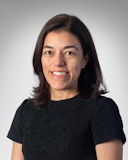 ship in Endocrinology at Massachusetts General Hospital. Dr. Fazeli was kind enough to answer a series of questions from the PNA; her answers follow.
What is your current position?
I am Chief of the Division of Endocrinology and Metabolism at the University of Pittsburgh School of Medicine. I moved to UPMC in 2019 to start the Neuroendocrinology Unit. Together with our outstanding neurosurgical and multidisciplinary teams, we started a Pituitary Center of Excellence.
Please describe your educational journey and mentors
I really fell in love with pituitary physiology and pathophysiology as a medical student at the University of Pennsylvania. I rotated in Dr. Peter Snyder’s clinic, and he is a renowned neuroendocrine pituitary specialist. After seeing patients with him as a third-year medical student, I decided I wanted to become a pituitary endocrinologist. I was a resident in internal medicine and a chief resident at Columbia University Medical Center, where I worked with wonderful endocrinologists, including Drs. Sharon Wardlaw and Pamela Freda. When I did my fellowship at Mass General Hospital, my primary mentor was Dr. Anne Klibanski. I also worked with outstanding clinical mentors including Drs. Lisa Nachtigall and Beverly Biller.
What did each of these people teach you?
Anne Klibanski was my primary research mentor, and she really taught me what it means to be a physician scientist. I learned everything I know about Cushing’s from Sharon Wardlaw and Beverly Biller. I learned so much about acromegaly pathophysiology from Lisa Nachtigall. I was able to come to the University of Pittsburgh and start the Neuroendocrinology Unit, because of everything I had learned back from my days as a medical student at Penn through Columbia, and then through Mass General. Mentorship doesn’t end with training. Since moving to Pitt/UPMC, I have learned a lot from directors of other outstanding programs, including Dr. Maria Fleseriu at Oregon Health and Science University.
What sets UPMC apart?
We established a Pituitary Center of Excellence at UPMC in 2021. What is most important about our program is that we have a multidisciplinary group of neurosurgeons, otolaryngologists, neuropathologists, neuro-ophthalmologists, neuroradiologists, pediatric endocrinologists, and radiation oncologists, who all work incredibly well together. We are a very well-functioning team that works to make sure that the patient has the best possible experience. This includes optimal outcomes for their disease, but we also listen very carefully to every patient to ensure that we are providing personalized care.
What is the biggest challenge upcoming for endocrinology?
I think one of the biggest challenges in pituitary endocrinology relates to diagnosis. Patients can have signs and symptoms of a disorder, and go undiagnosed for many, many years, especially with acromegaly and Cushing’s. We need to improve our ability to diagnose and localize the source of the disease, especially with Cushing’s.
We have all of these wonderful new treatment options, and many more on the horizon, but we are still lagging with respect to diagnosis. Acromegaly can be a pretty straightforward disease to diagnose, but someone has to think about the diagnosis and know how to test for it. With Cushing’s, diagnostic testing is a bit harder, and patients can go for a long time without being diagnosed. I think we hear and see that frustration when patients finally come to see us.
Another big challenge, and one of the things that we work hardest on when we are seeing new patients with Cushing’s, is the knowledge that they are not necessarily going to feel better immediately after surgery. They have been feeling unwell and struggling for so long with their disease, and it can be heartbreaking to break the news to them that they are not necessarily going to feel well right after surgery. Often, they’re going to feel terrible at first, and the recovery period, particularly for patients with Cushing’s, can be very, very challenging. Pituitary endocrinologists work very hard to educate patients on what to expect in terms of recovery from Cushing’s. Therefore, another goal in our field is to improve the post-treatment recovery period for patients with Cushing’s.
What do you see as the biggest advances in the last few years, and what do you see as coming up?
I think what has been most exciting in the last five to ten years are all the new therapeutic options that are being investigated, approved and brought to market. When I was a fellow, we didn’t have many options for the treatment of acromegaly and Cushing’s, and now for acromegaly we have oral medications that are incredibly effective, and for Cushing’s we have multiple options that are now FDA approved. It is a very exciting time to be in the pituitary endocrine world.