
PNA Spotlight: Dr. Nelson Oyesiku
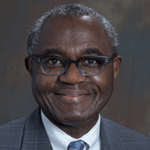
This month the PNA Spotlight focuses on Dr. Nelson Oyesiku, systems neuroscience chief of Piedmont Healthcare in Atlanta, Georgia. He was formerly professor and chair of the Department of Neurological Surgery and professor of medicine (endocrinology) at the University of North Carolina, Chapel Hill. He earned his Bachelor of Medicine and Bachelor of Surgery at the University of Ibadan in Nigeria. He completed an MsC at the University of London and earned his PhD from Emory University, where he spent 35 years on staff. Dr. Oyesiku was kind enough to answer questions from the PNA. His answers follow.
Please tell us the main focus of your practice
I’ve been primarily a pituitary surgeon for more than 30 years, so my main interest is in neuroendocrinology; including surgery and medical conditions of the pituitary gland.
Tell us about your professional journey
I spent 35 years at Emory University. I left there in 2021 to take a position as chair of neurosurgery at University of North Carolina in Chapel Hill. Then in April of this year, I joined Piedmont Healthcare Systems in Atlanta, Georgia, as a systems neuroscience chief.
What should people know about Piedmont’s approach?
I am now head of the neurosciences service line for all of Piedmont Healthcare, which includes oversight over neurosurgery, neurology, and psychiatry across all the Piedmont entities across the state of Georgia, which includes the hospitals, the clinics, and the practices of the providers in the neurosciences service line. That includes the pituitary and skull-based neuroendocrine lines as well. I’m also a practicing neurosurgeon.
What are your goals in this new position?
My goals are to develop, expand, and improve our neurosciences service line in terms of what we do in clinical delivery of care, quality, safety, and advancement of the field delivering patient-centered care.
What led you to choose this field?
When I first decided to go into medicine, I was influenced by a medical drama series that was on around that time called Ben Casey. It was a medical drama series whose protagonist was a resident in neurosurgery at San Francisco General. The series charted his course of training and was very popular at the time. It was one of the earliest medical drama series, long before Doogie Howser, Dr. Kildare, St. Elsewhere, or Grey’s Anatomy.
Where did you grow up?
I grew up in Lagos, Nigeria, where I went to primary school, secondary school, high school, university, and medical school. I started in the U.K., and then came to the United States, where I did my residency in neurosurgery at Emory University. Then I completed a graduate degree in neuroscience, earning a PhD at Emory. I joined the faculty upon my completion. My chairman at the time was a renowned pituitary neurosurgeon, and so I followed his footsteps at Emory, and we continued to develop an outstanding Pituitary Center of Excellence.
We were one of the first authors of the Pituitary Tumor Center of Excellence concept, along with several other authors including Dr. Ed Laws Dr. Daniel Kelly. That was my main focus throughout my time at Emory. We also had a laboratory to investigate pituitary tumors, and we developed the largest pituitary tumor tissue bank. We did a lot of research on pituitary tumors, and our lab was the first to identify a unique receptor in clinically non-functioning adenomas, which allowed us to develop clinical imaging tools for use in the ambulatory setting as well as in surgery to guide the resection of tumors.
Who was your primary mentor?
Dr. George Taylor Tindall, who was my chairman at Emory, brought me on and hired me as a resident to train in neurosurgery. He was a world-renowned pituitary neurosurgeon, and it was because of him that I went into the field. Doing cases with him was always exciting. It was phenomenal to follow patients through their diagnosis, which was always a very intellectual exercise, particularly patients with Cushing’s or acromegaly. I loved seeing them undergo these unbelievable reversals in their medical conditions. In many cases, you get to be part of their lives as you continue to follow their condition. This is how I became enamored of pituitary medicine.
How has pituitary medicine changed since you entered the field?
I have always been interested in research and the resulting medical advancements. New drug developments and new diagnostic tools occur all the time. I’ve seen the image guidance field go from CT to MRI to PET. We used to have few options for medical treatment of acromegaly and Cushing’s; now we have several. It has been an exciting time to be in the field in terms of advancements and care of patients.
Surgery has also evolved. I’ve gone from microscopes to endoscopes to image guidance, and so on, all in the space of two or three decades.
So, what is the new frontier?
I think we’ll continue to see improvements in our knowledge of the biology of these tumors. We will learn more about what makes them happen to start with, how we can control them with less invasive treatments, and maybe even cure them definitively without having to do anything more invasive. Pituitary surgery has evolved considerably, as well. Cure rates are better, and patient outcomes in the long run are better. We have seen advances in recent years with imaging tools, surgical instrumentation, and our knowledge of pathophysiology. On all three fronts, we’re going to continue to see progress. We will have imaging, better surgical rehearsals. A-I will assist us in being able to figure things out better. I’ve been devoted single-mindedly to pituitary surgery and medicine my career.
Why did you get involved with the PNA?
I knew the founder, Bob Knutzen, very well, may he rest in peace. We were great friends. He visited Emory several times over the years when we had pituitary tumor awareness days, and I was very impressed with Bob. He was a very passionate leader in the field and really did a lot to advance the care of patients with pituitary tumors. That was always his number one passion: the patient. It was always about what’s best for the patient, and he was a great advocate for that over the years.
I think I first met Bob at the Pituitary Society meeting in San Diego at the time. He visited the facility at Emory for at least three pituitary tumor days. On one of those occasions, the PNA honored me with their Gentle Giant Award. Bob was a phenomenal person, very special.