









Nominate for Gentle Giant Award!
Do you have a pituitary HCP who has made a profound difference in your care or your life? A real “Gentle Giant”. We want to hear about them! Help us recognize the amazing professionals who go above and beyond by nominating your favorite doctor. Your story can help shine a light on the heroes in our community and inspire others on their journey. Submit your nomination today—we can’t wait to celebrate them with you!
Don’t Miss Our Exciting Upcoming Events!
Discover Leading Professionals and Specialized Services in Healthcare
Search
Recent Webinar
Patient’s Corner
Introducing Patient’s Corner, a place for you, the patient, to share your stories. If you have a story you would like to share please contact us below.
Patient story:
Panhypopit patient in a bind as Humatrope is discontinued
Tara Cummins, a pituitary patient in Klamath Falls, Oregon, says she’s at her wits’ end because the medication she depends on, Humatrope, is being discontinued by pharmaceutical giant Eli Lilly. Humatrope is Lilly’s version of somatropin, used to keep people like Cummins alive. Cummins suffers from panhypopituitarism, which developed after pituitary failure soon after a hysterectomy done in 1992 to counter painful recurring ovarian cysts. She also experienced pituitary failure.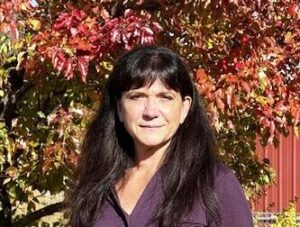
Cummins has no health insurance because she makes too much to qualify for Medicaid and cannot afford to buy insurance on the individual market. In addition, when she had insurance, it didn’t cover the medication she needed. She sued the insurance company, saying, “Policies are allowed to be changed and modified to under-cover conditions or medications or exclude treatment for certain conditions. Early on after my settlement with the insurance company (where I still maintained my policy) they changed the terms of the policy, leaving me with a choice of having insurance but not coverage (or adequate coverage) for the somatropin which left me with out-of-pocket expenses that almost no one would be able to afford. With no insurance, I could qualify for patient assistance directly through the manufacturer. The term used was being under insured; as if I had any option to be more insured.”
So, Cummins has been paying for doctor visits on her own and she relies on Eli Lilly’s patient assistance program for free access to her medication: 1 mg each night. At age 63, it’ll be a little more than a year before the retiree qualifies for Medicare. In the past, she took Pfizer’s version of the medication, Genatropin, but Pfizer discontinued its patient assistance program two years ago, and the medication costs between $5,800 and $16,000 a month if you don’t have insurance.
Cummins says she hopes to get one more shipment from Eli Lilly, which would last her about four months. She says she’s been told that her life expectancy without the medication is about two years.
Complicating matters, Novo Nordisk’s Norditropin Flexpro subcutaneous solution for injection, is on shortage as of September. On ashp.com, the shortage is attributed “to increased demand and manufacturing delays.” The site notes that Ferring has Zomacton available; that Genentech discontinued Nutropin AQ Nuspin presentations in December 2024; that Pfizer has Genotropin available (but discontinued the patient assistance program); and that Sandoz has Omnitrope available.
In addition, Cummins had her thyroid removed and relies on natural thyroid medication. However, the FDA announced in August that it wants animal-derived thyroid medications off the market because they are not FDA approved and “contain many compounds that are uncharacterized for safety and effectiveness.” The FDA estimates that “1.5 million patients received prescriptions for these medications from U.S. outpatient retail pharmacies in 2024.”
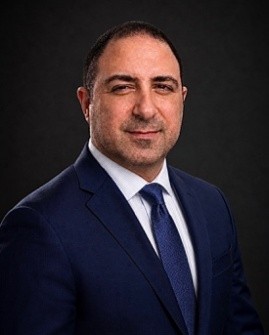
PNA Spotlight: Georgios A. Zenonos, MD FAANS
Georgios A. Zenonos is the Neurosurgical Director of the Center for Cranial Base Surgery, Pituitary Center of Excellence, and Center for Cranial Nerve Disorders at the University of Pittsburgh Medical Center Neurological Institute. Dr. Zenonos received his medical degree from the National and Kapodistrian University of Athens School of Medicine.
He undertook post-doctoral research fellowships at Harvard Medical School in 2010 and at the University of Pittsburgh in 2011. He stayed on and completed his seven-year neurological surgery residency training, as well as an enfolded fellowship in endoscopic and open skull base surgery at the University of Pittsburgh School of Medicine. He then went on to complete a fellowship in skull base and cerebrovascular surgery at the University of Miami. Dr. Zenonos was kind enough to answer some questions from the PNA. His answers follow.
Please tell us why you chose to specialize in neurosurgery?
I was always intrigued by our nervous system and the brain in particular; they are sort of what makes us who we are. Even in medical school, one of the things that interested me the most was learning about brain and its functions. The surgical specialties were more appealing to me, because you can make a big difference for a patient. It seemed like we were almost preparing to go to war, where it was you and the patient against the disease. It was more physical, and direct way to help patients. In surgery, there is no hiding. The effects of everything you do are so immediate and direct, so it’s quite more gratifying.
Tell us about your early education.
I grew up in Cyprus. Everyone there must do military service after high school. I completed a 26-month period of military service, where I served as a military officer, and then went straight to medical school at the National and Kapodistrian University of Athens. Medical school in Athens is a six-year program.
I then completed a post-doctoral research fellowship in Boston at Harvard Medical School, and then moved to Pittsburgh for my residency, as well as a skull base fellowship, focusing both on endoscopic approaches and open approaches. I then moved to Miami for one year for an additional fellowship in cerebrovascular and skull base surgery. I moved back to Pittsburgh to join the faculty in 2019.
“I think that the PNA is a wonderful resource for patients. It gives patients access to information that’s relevant to their disease, and the opportunity for surgeons to share their experience and perspectives. In many ways, it democratizes access to information and appropriate care for pituitary diseases. It’s truly a unique resource.”
PNA Gratefully Acknowleges Our Supporters




Get Involved
If you wish to donate, contact:
- P.O. Box 1958, Thousand Oaks, CA 91358
- Office: 805.499.9973
- Fax: 805.480.0633
- Email: [email protected]

Coming Events

Volunteer With Us
Pituitary Patient Toolkit
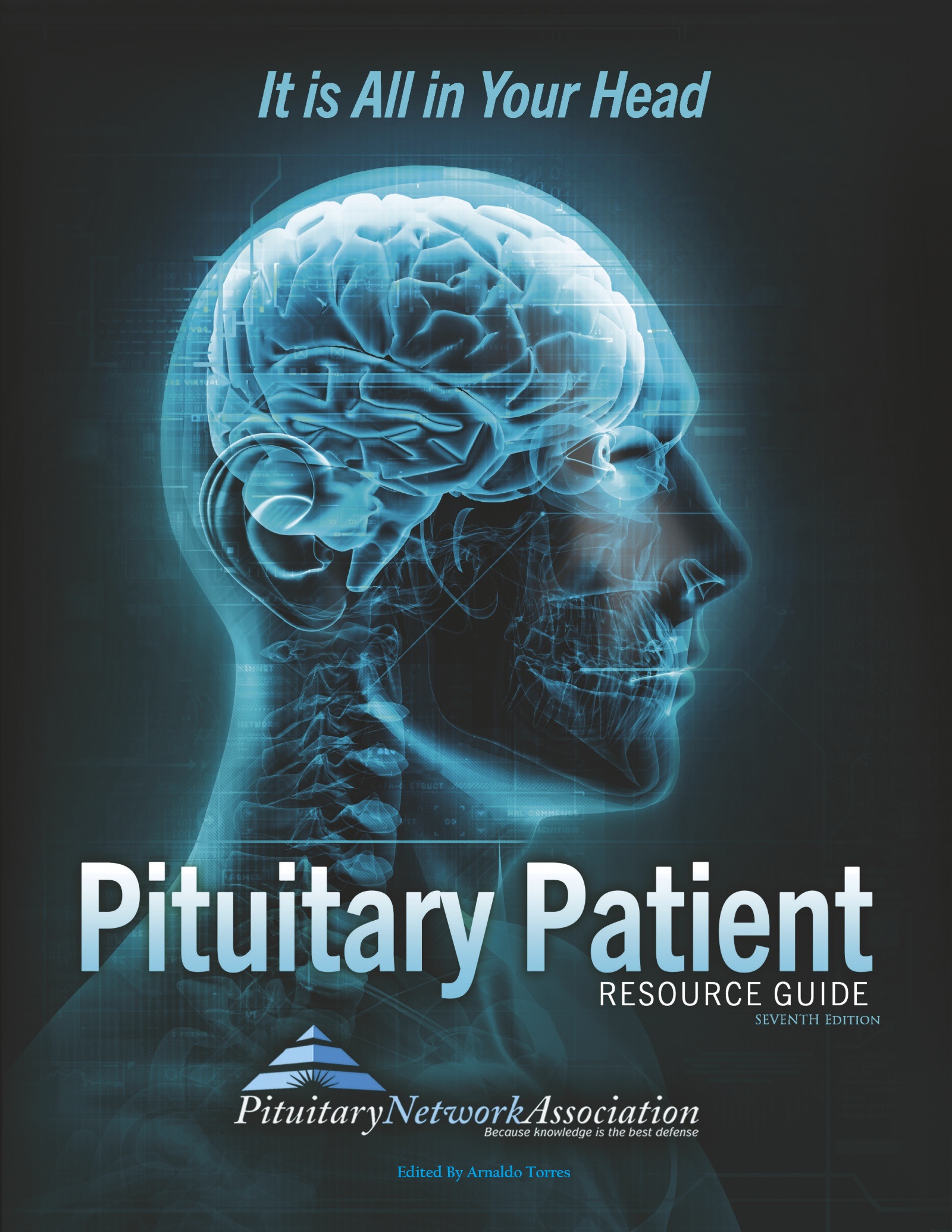
Seventh Edition - Now Available!
The Pituitary Patient Resource Guide Seventh Edition is now available! Be one of the first to have the most up-to-date information.
The Pituitary Patient Resource Guide a one of a kind publication intended as an invaluable source of information not only for patients but also their families, physicians, and all health care providers.
It contains information on symptoms, proper testing, how to get a diagnosis, and the treatment options that are available. It also includes Pituitary Network Association’s patient resource listings for expert medical care.
Latest News
May 2024 Research Articles
Pituitary Surgery The effect of preoperative TSH levels on perioperative complications in patients undergoing pituitary surgery. Report on Pseudoaneurysm Caused by Injury of Internal Carotid Artery...
PNA Spotlight: Dr. Adam Mamelak
This month the PNA Spotlight focuses on Dr. Adam Mamelak, a neurosurgeon and co-director of the Pituitary Center at Cedars Sinai Medical Center in Los Angeles. Dr. Mamelak earned his B.A. in Physics...
April 2024 Research Articles
Pituitary Surgery Endoscopic Endonasal Transsphenoidal Surgery for the Resection of Pituitary Adenomas: A Prime Candidate for a Shortened Length of Stay ERAS Protocol? A Systematic Review. Related...